Panel 1 of 3
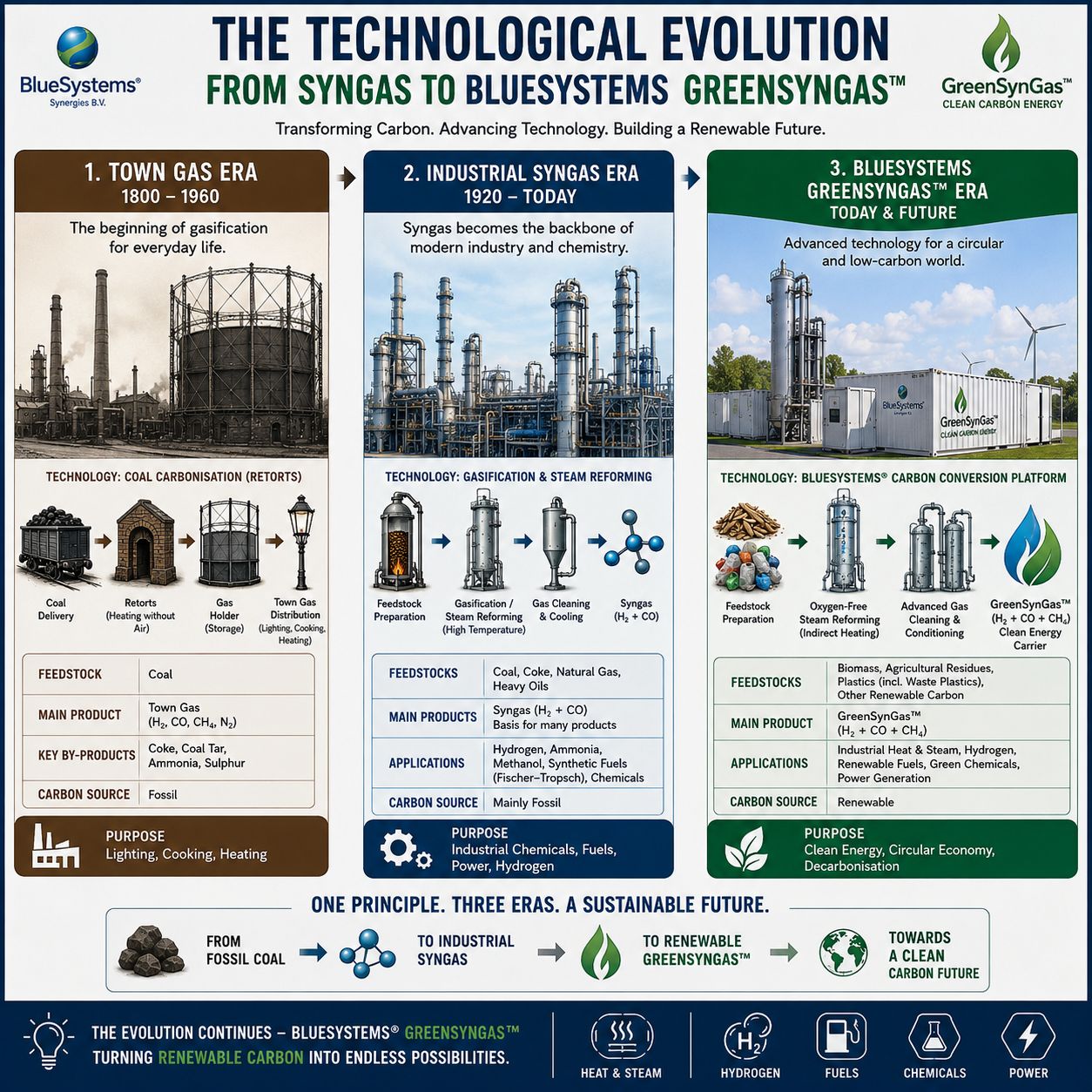
Making a useful gas out of carbon-rich material is not a new idea — it has been done for two centuries, each era with its own feedstock, its own technology and its own purpose. This poster sets the three eras side by side.
- •Town Gas Era (1800–1960): coal baked without air, stored in a gas holder, used to light, cook and heat the town.
- •Industrial Syngas Era (1920–today): coal, coke, natural gas and heavy oils gasified and steam-reformed into hydrogen, ammonia, methanol and synthetic fuels.
- •BlueSystems GreenSynGas™ Era (today & future): biomass, agricultural residues and waste plastics converted without oxygen into clean gas for heat, hydrogen, fuels, chemicals and power.
Where This Leaves Us
Steam Reforming, Built for the Philippines
Today the same principle runs at 700–1000°C with steam, turning carbon-containing waste into GreenSynGas™, hydrogen, mineral fertilizer and distilled water — in modular units that can be assembled on site.