Blue Systems

Decentralizing Green Infrastructure

Tokenizing Blue Systems Waste-to-Energy

Transforming Municipal Waste into Liquid Digital Yield

A proposed framework for unlocking global capital, fractional investment and real-time transparency for advanced modular waste-to-energy infrastructure.

Concept overview · Subject to legal structuring, regulatory approval and project due diligence

01 · The Challenge

Bridging the Capital Gap in Green Technology

Traditional waste-to-energy financing depends heavily on centralized banks, private equity and lengthy approval cycles. These can slow the deployment of capital-intensive clean technology.

Blue Systems’ modular, containerized approach is designed for rapid deployment and scalable waste processing. Financing a distributed network of these assets calls for a financial architecture that can connect physical infrastructure with a wider pool of capital.

02 · The Solution

From Physical Assets to Digital Project Rights

Tokenization links a facility and defined financial rights to blockchain-based tokens. What an investor owns depends on the legal documents—not the token alone.

Step One

Asset & Revenue Review

Audit and value the physical facility and its projected cash flows, including tipping fees, power purchase agreements and eligible carbon offsets.

Step Two

Legal & SPV Structuring

Establish a Special Purpose Vehicle (SPV) or legal trust to hold the plant, machinery or revenue-sharing rights. Tokens would represent defined ownership, debt or revenue rights tied to that structure.

Step Three

Smart Contracts

Use programmable blockchain contracts to support identity and anti-money-laundering checks (KYC/AML), distributions and governance voting, alongside legal and regulatory oversight.

Step Four

Issuance & Distribution

Offer tokens through a Security Token Offering (STO) or regulated digital asset platform, subject to applicable financial regulations and investor eligibility.

Step Five

Operational Integration

Connect plant sensors and verified data feeds through oracles—services that bring external data onto a blockchain—to report waste processed, energy generated and eligible environmental credits.

03 · The Core Value Proposition

Why Tokenize Blue Systems W2E?

A potential connection between infrastructure funding, fractional project participation and verifiable operating performance.

For Project Owners, Municipalities & Developers

Alternative Capital Pools

Access a wider pool of eligible investors beyond traditional banks, private equity and institutional infrastructure funds. Retail participation depends on local rules and the offering structure.

Potential Cost Efficiencies

Streamline issuance and administration by reducing intermediaries. Any savings must be assessed against legal, compliance, platform and operating costs.

Fractional Project Rights

Finance expansion or equipment through a minority interest—for example, 20% of future cash flows—while retaining operational control where the legal structure allows.

Automated Governance

Support distributions from energy sales and voting on plant upgrades through smart contracts, reducing manual administration while preserving required oversight.

Green Attributes

Explore tokenized Verified Emission Reductions (VERs) and Renewable Energy Certificates (RECs), alongside or separately from energy revenues, subject to verification and eligibility.

For Investors & Capital Partners

Lower Entry Thresholds

Fractional interests could make infrastructure investment accessible at smaller amounts. The supplied concept gives $100 or $1,000 as illustrations only—not confirmed minimums or a specified currency.

Multiple Revenue Streams

Potential cash flows include waste tipping fees, electricity or heat sales under Power Purchase Agreements (PPAs), and eligible environmental credits and recovered commodities.

Potential Secondary Liquidity

Eligible tokens may be tradable on regulated secondary marketplaces rather than remaining locked in a traditional 7–10-year fund. Market access, buyers and an exit are not guaranteed.

Transparency & Auditability

Verified operating metrics and financial distributions could provide near real-time visibility. On-chain records still depend on accurate source data, independent audits and reliable reporting.

Potential Project Cash Flows

Three Sources of Revenue

Actual income depends on signed contracts, plant performance, operating costs and market conditions.

Tipping Fees

Payments from municipalities and businesses for processing waste.

Energy Sales

Electricity or heat revenues under project-specific purchase agreements.

Credits & Commodities

Eligible carbon credits, recovered materials, mineral fertilizer and distilled water.

04 · The Technology Edge

Blue Systems Steam Reforming

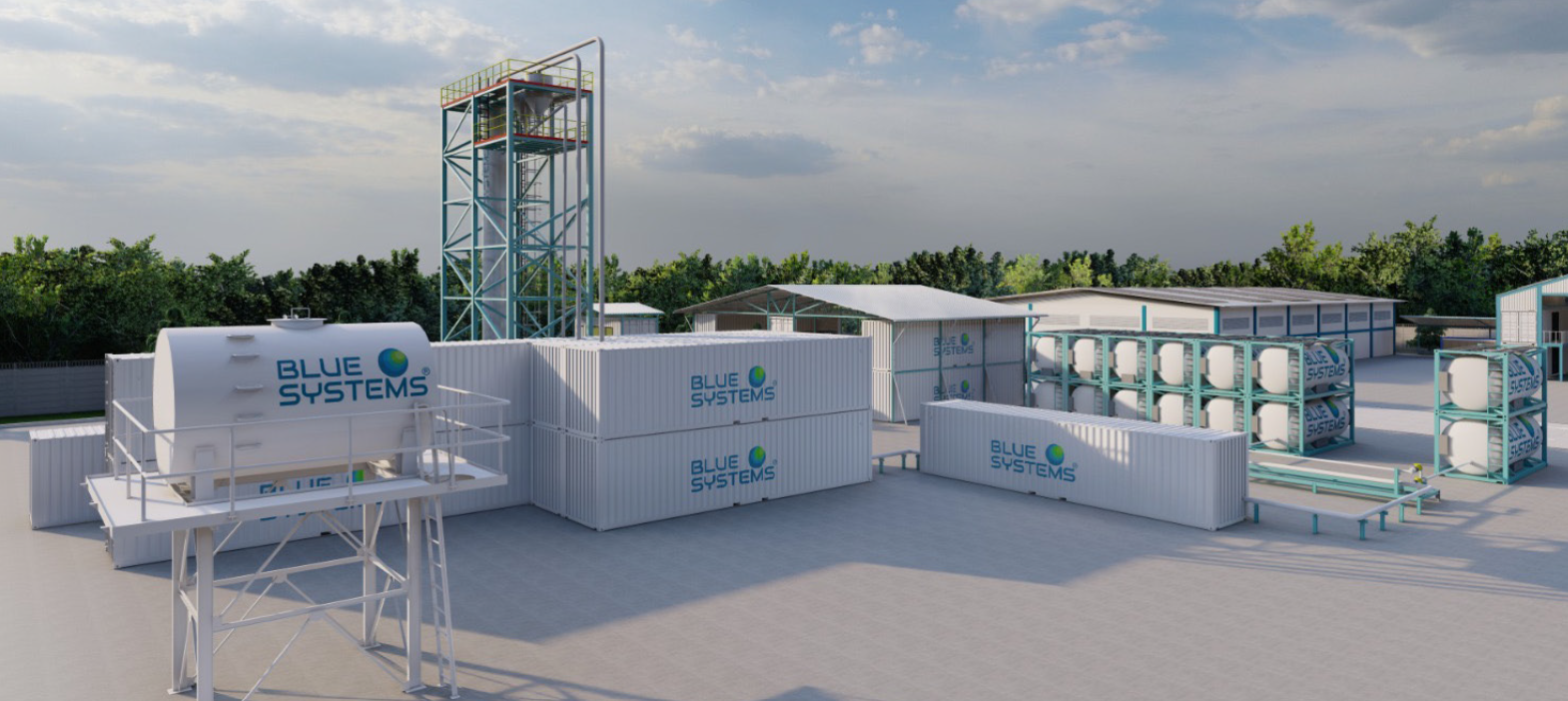
The supplied technology overview describes patented second-generation (MkII) steam reforming at 700–1000°C, converting non-recyclable carbonaceous waste, plastics and biomass into GreenSynGas™, hydrogen and recovered outputs without direct combustion.

Blue Systems containerized waste-to-energy plant with process tower, storage tank and modular containers

Technology specifications, output quality and emissions performance require project-specific engineering and independent verification.

Verifiable Green Impact

Connect verified plant data with digital reporting to track landfill diversion and eligible carbon offsets. Environmental claims and credits require independent assessment.

Scalable Regional Deployment

The concept outlines 10–50 tonnes/day cooperative units and 400–1,000+ tonnes/day municipal clusters, supported by structured digital debt or equity. Capacity and availability must be confirmed for each project.

Partner With Us

Explore Decentralized Green Infrastructure

Connect with our team to discuss tokenized SPV structuring, regulatory frameworks and upcoming project deployments.

Daniel Morby

Quettil Blue Systems

Important Investment Considerations

This page describes a proposed financing concept, not an active token offering, investment advice or a promise of returns. Participation, ownership rights, distributions and transferability depend on final legal documentation and applicable regulations. Capital is at risk; liquidity, yield, cost savings and environmental credits are not guaranteed. No confirmed token launch, platform, minimum investment or investment terms are stated here.